


One of the things that I love about this time of the year is that together with the freezing weather and what feels like zub zero temperatures, comes a gardeners yearly rest time, but it is also the ideal time to dream of a better garden although I prefer to call it planning, yes I am planning my cutting garden for the new season. I look for inspiration wherever I can find it. I use photographs, seed catalogues, books (particularly old books), podcasts, the internet, TV and radio have also all proved useful to me in the past.
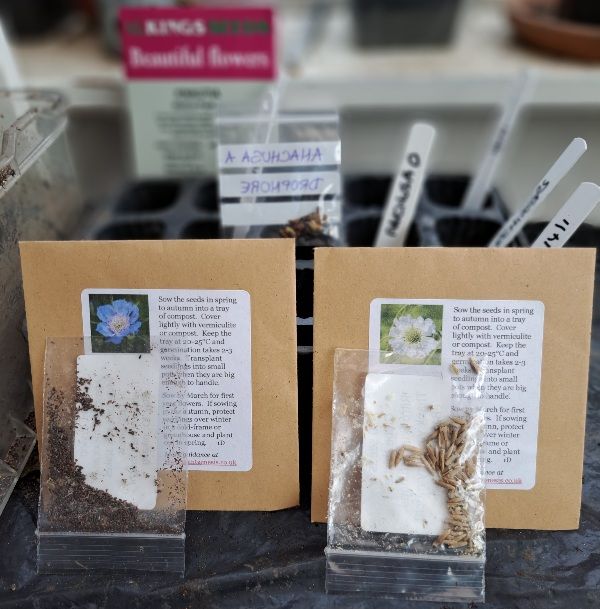
But enough of dreaming, I can do that when I am waiting for the bus to my day job. Last weekend there was a brief hiatus to the wet and windy weather and it was so peaceful I decided to sow some seeds.
Now, it is still far to early to sow the hardy and half hardy annuals like Nigella and Cosmos, but I am hoping to coax some first year flowering hardy perennials into flower to use as cut flowers later in the year. Sowing seed in the cold dark depths of January is always going to be a leap of faith but the sowing of seed is to have faith in the future anyway (and I have hedged my bets by keeping some of the seed back just in case)
A rough description of a Hardy Perennial is a plant that dies back in the winter to re emerge in the spring and early summer ready to have its crowning glory later in the year.
But why choose a hardy perennial over a hardy annual as a cut flower. Well certainly for the first year flowering perennials there are lots of reasons. The primary one is that once they are established they come back every year. This makes them good value for money compared to the annual flowers that are so often used for cut flower arrangements. Another reason is that I have noticed myself that the hardy annuals and the bulbs I have grown in the past have struggled with the more frequent extremes in our weather patterns which the hardy perennials seem better able to cope with.

These attributes makes them a very attractive prospect for many people from a busy mum, to the full time worker and anybody who wants a colourful garden but would prefer not to spend several hours transplanting seedlings, which can be so difficult for anybody who suffers from a bad back or who struggles with kneeling down. Of course, there are drawbacks. Some hardy perennials need specific conditions, such as full sun or lots of water, so it is always best to check out what you are buying.
The hardy perennials that I have chosen are easy to propagate, so new plants can be acquired for free.
Most of my hardy perennials grow to a height of between 24 inches to 36 inches. Which also means that with the perennials that I grow, I get good stem length for cutting flowers. I have also tried to use plants that have some resistance to slug damage. Over the years I have made a record of the plants that seem to fare better in this garden when it comes to slugs, but it is an onging war, some battles they win some I win.
I have sown Pentstemon – The trumpet shaped flowers come in a wide variety of colours. I am growing a packet that has been sold as a colour mixture, so I am hopeful of some interesting colours.

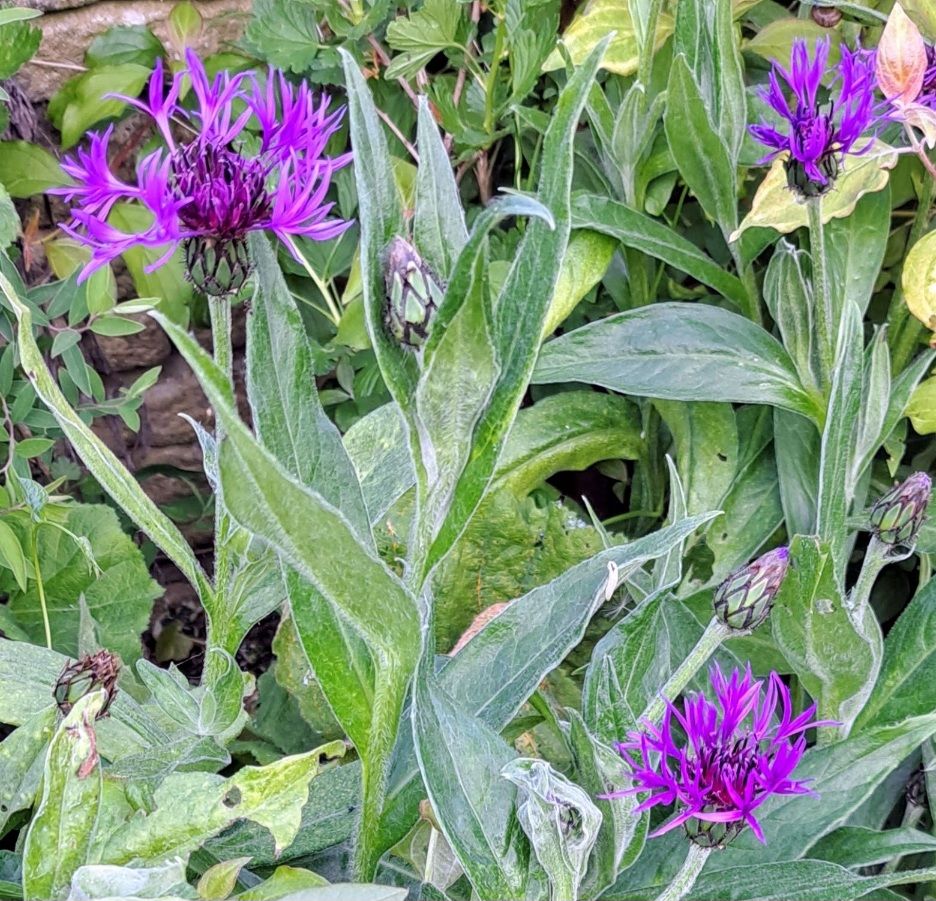
Centaura – perennial cornflower – an intense vibrant puple/ blue, spidery floret style petals set in a whorl around a deeper purple blue centre. Apparently, this flower can become almost invasive, but it is so beautiful that I think I would welcome it invading my garden. We shall see.
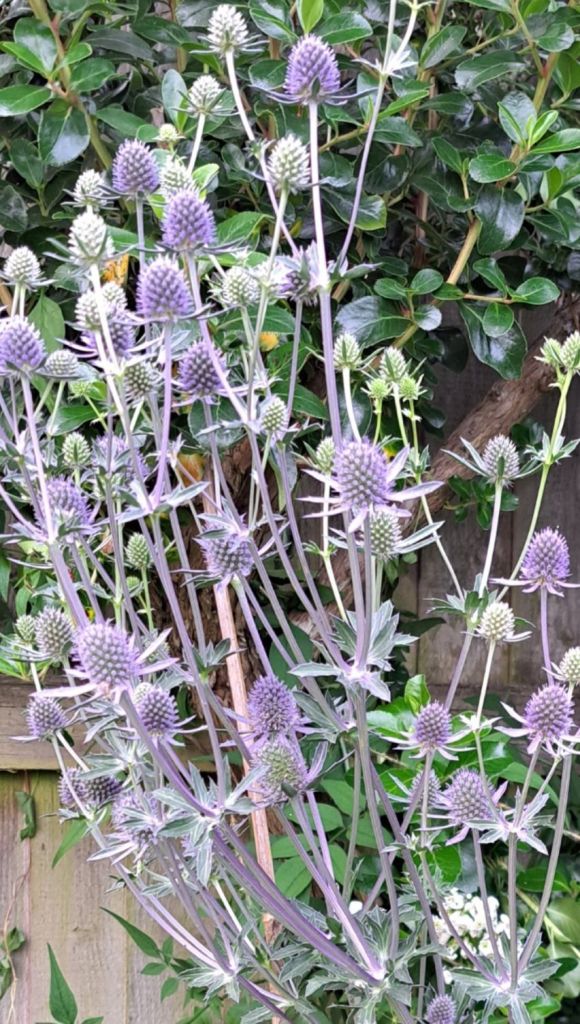
Eryngium – I have both a white and a steely blue variety of this flower. They are stately sculptural flowers, imposing in a bouquet and whenever I have included them in a bouquet they always attract attention. Tall and statuesque they have a thistle like centre with the base surrounded by a fringe of petals.
Although I do like the hardy and half hardy annuals, particularly the cut and come again, Cosmos, Hardy perennials hold a special place in my heart. If you choose wisely, they are very forgiving as once the young plant has been placed in its final resting place, they can be left alone, except for the watering. This means that they can be an easier option for a busy person rather than the Half Hardy Annuals that need far more tender loving care. Some of them have a brief moment of glory, but that moment all too often is spectacular and all the more precious because it is so fleeting. It means that the garden and the flowers that I cut from it are ever changing. There is always something new to see from the fancy Daffodils that can begin in February right up until the last spectacularly red and gold Chrysanthemums just before Christmas. They all have a place in the garden and the vase.

 Seeds and Seams
Leave a comment