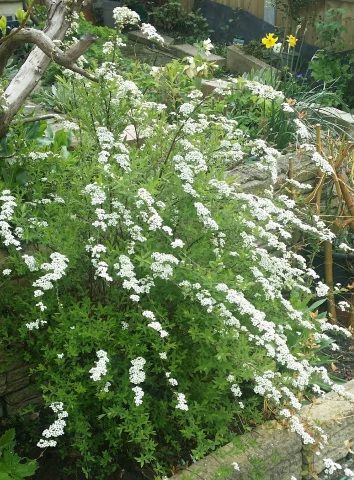


There was a touch of spring in the air this week and it seemed the right time to embark on some serious gardening. Whilst, I am in the process of developing my business by selling flowers and designing borders and gardens, I am first and foremost a gardener with gardens to maintain. As both I and my gardens waken from our winter slumber, and I walk around the gardens in the strenthening sunshine, it becomes apparent that spring is on the way even if it is in between the torrential rain showers. Usually, at this time of the year, some serious maintenance is required, and currently, the most pressing of these tasks is springtime pruning. I was taught that the general rule of thumb when it comes to pruning is that if a plant flowers before midsummer, then it is pruned immediately after flowering. If a plant flowers after midsummer, for instance, in July, then it is pruned the next Spring. Even with this advice it is always best to do some research into the growth habits of the plant that you are intending to prune as a severe cold snap can do a great deal of damage to the plant. As I walked around my garden, the first plants that I noticed needed pruning were some of the Clematis. I see so many Clematis on my daily walks that are not maintained. They have been left to their own devices and left unpruned. A vigorous unpruned Clematis will become a muddle of tangled stems and may not flower properly.

Clematis come in different flowering groups, and the correct pruning time for my Clematis is in early spring, so now is a good time to cut them back. The Clematis that I was intending to prune were the large flowered group 3 mid to late summer flowering types, which look spectacular in July, such as this beautiful Comtesse de Bouchard.
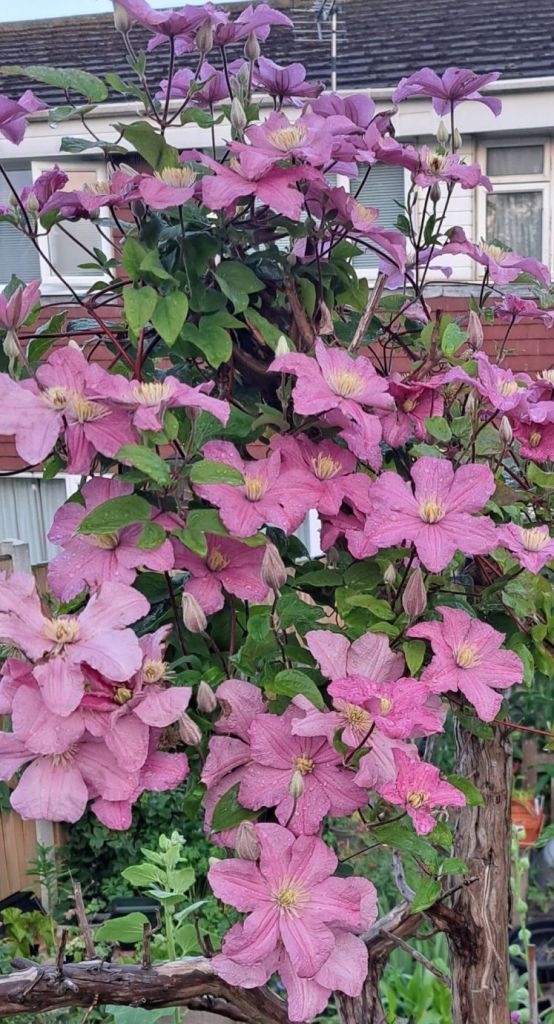
They flower on growth that is made during the season. If I left these unpruned, they would become an unruly, tangled mess , whereas if I prune them now when the buds are beginning to show signs of growth, the flowering is spectacular.

So out come the secateurs. I have already sharpened them, and I keep some disinfectant wipes with me to wipe them down when I move on to a new shrub to cut. Both of these points are very important as disease can easily spread around the garden through dirty secateurs. I proceeded to cut the stems back to just above a strong pair of leaf buds, which are approximately 30 cm above ground level. Hopefully, some new stems will begin to grow, which I can train in to the supports.
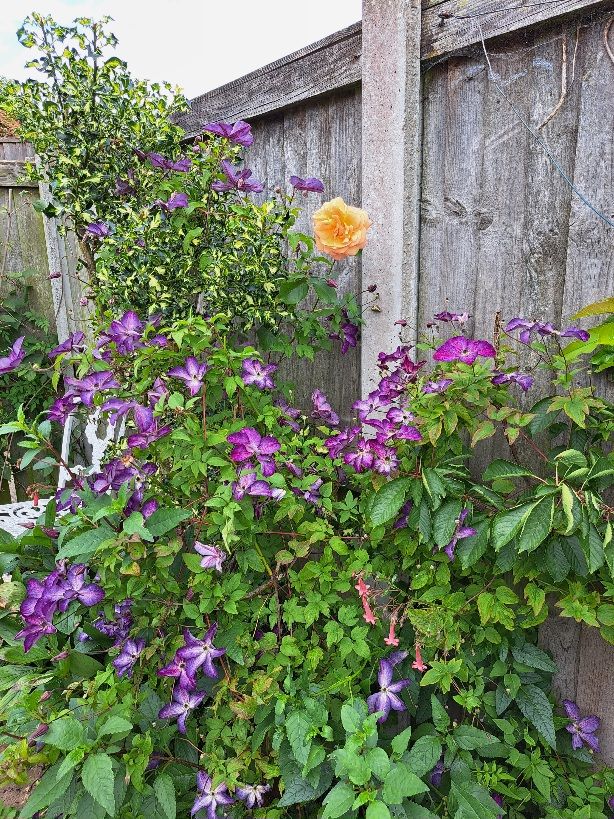
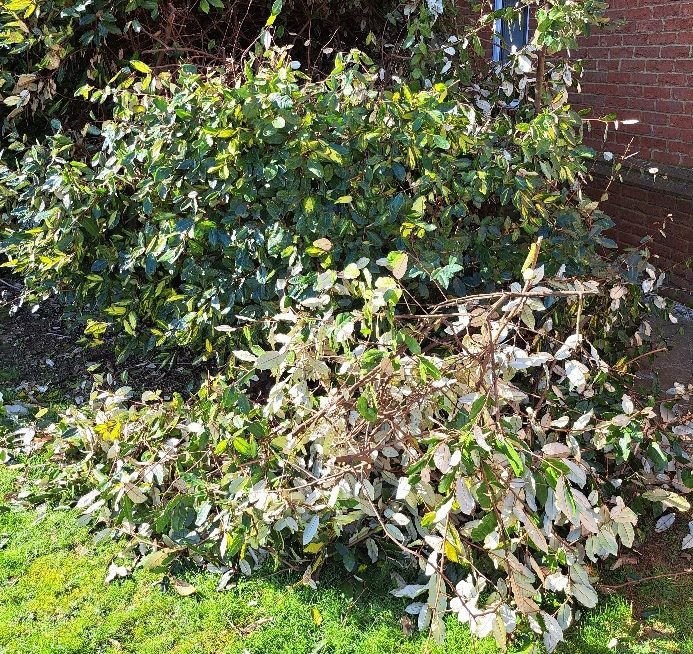
My next job is to take back control of a rather large Eleagnus. Now, I think that a correctly maintained, variegated Eleagnus such as Eleagnus Pungens Maculata, is a plant with a lot going for it, they can be quite spectacular and are very bright.
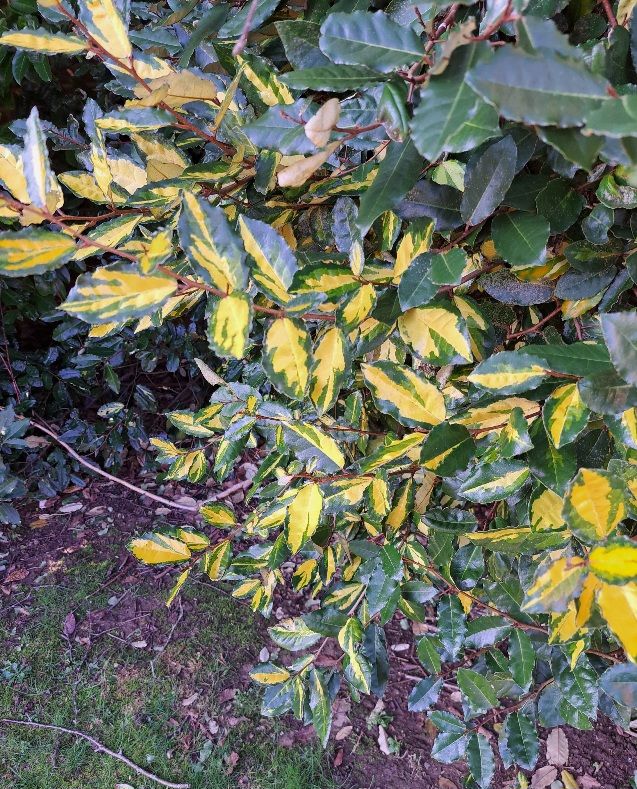
But to get the best out of them, they need to be properly maintained, this includes cutting out any branches that are reverting to the plain green. Eleagnus is a tough shrub, withstanding temperatures down to -15 C, although, according to my research, they may not be able to withstand open/exposed sites or central/northern locations. This particular Eleagnus was planted in front of a window and was also, therefore, blocking out some natural light. I had already surveyed the plant and concluded that I had the correct tools for the job, the stems of the Eleagnus were narrow enough for my loppers, and I could see that my pruning saw and secateurs would be able to cope with the remaining branches. The shrub itself was probably almost as broad as it was high and thicket like towards its centre.

I began by tackling the outer edge and working my way inwards. It was not too arduous a job and oddly satisfying. Needing me to be methodical and to keep an eye on the shape that was being cut. I carried on until I could see a difference in the size of the shrub, and the cut branches were threatening to engulf me. I resolved to dispose of what I had cut before embarking on any more pruning of this shrub.
My next job was to prune the roses. now I have quite a few roses, 25 at the last count, and my small collection covers all the various types. I started on the hybrid tea roses. These repeat flower at the end of long stems and are perfect for cutting. The first job is to cut out any dead, diseased, or dying branches. I then cut each stem down to an outward facing bud. A sloping cut will ensure that rain water is shed away from the wound, and this will aid with healing. I also try to create a goblet shape so that air can circulate between the branches. I cut the strongest remaining branches four to six buds from the base to the point of last years growth. Any thin whippy stems can be cut back hard to encourage stronger growth.
Floribunda rose stems are left slightly longer so that the mass of flowers that look so spectacular have a chance to shine.
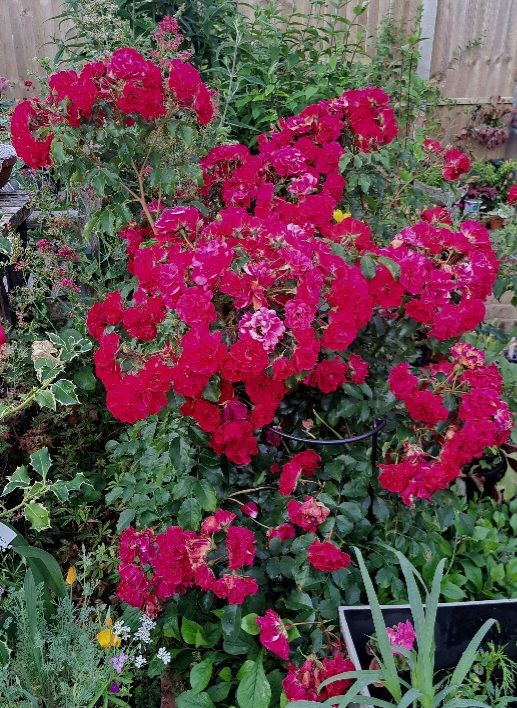
With climbing Roses, be gentle, it is best to leave a framework of branches. Prune the side shoots that have flowered by about two-thirds and remove all the dead, diseased, and damaged stems.
During the week I shall cut the Buddleia back hard to about 45 cm.
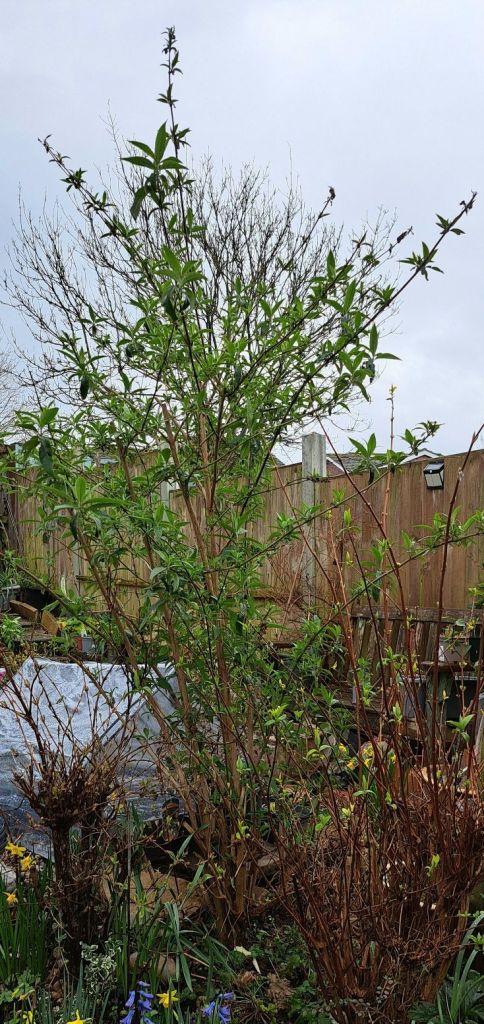
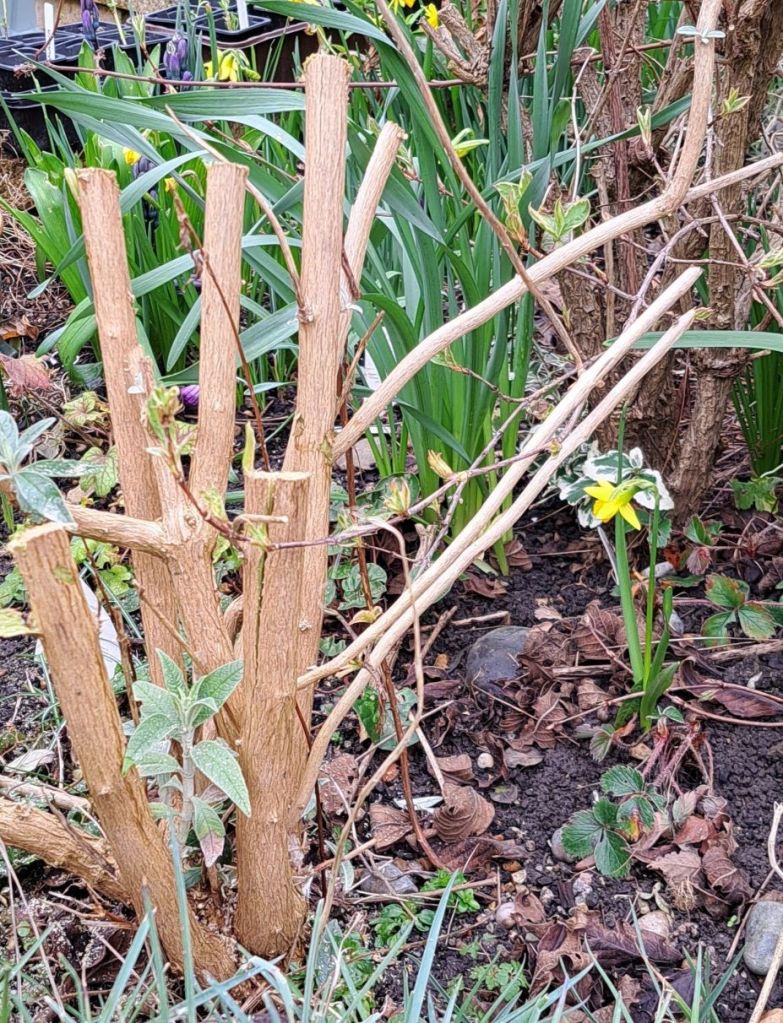
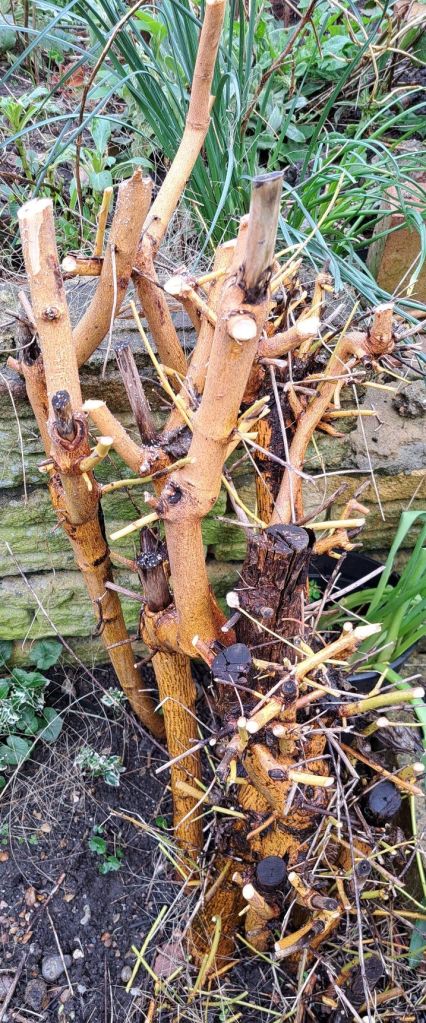
The Cornus can also be cut back hard, cutting back to 2 buds and removing any stems that are crossing. New growth will give the best colour later on in the year.
To finish up, I give my plants a dose of either high potassium fertiliser if it is a flowering plant or a general fertilizer for a foliage plant around the base of the plant following the manufacturers instructions.
I have a multitude of other shrubs that will require cutting back but they can all wait until later in the springtime, as if the weather does turn, there is always the chance that they will suffer stem die back.
 Seeds and Seams
Leave a comment