


As I wander out into the garden on one of the few bright days that we seem to be getting this year, I can feel the sun on my face and it seems as though all the flowers are impatient for the rain to stop and the sun to come out. The soil is beginning to warm up, and the flowers are beginning to peek out. The Flowering Quince has been flowering on and off for a few weeks now, and the strengthening sunshine is helping it along.
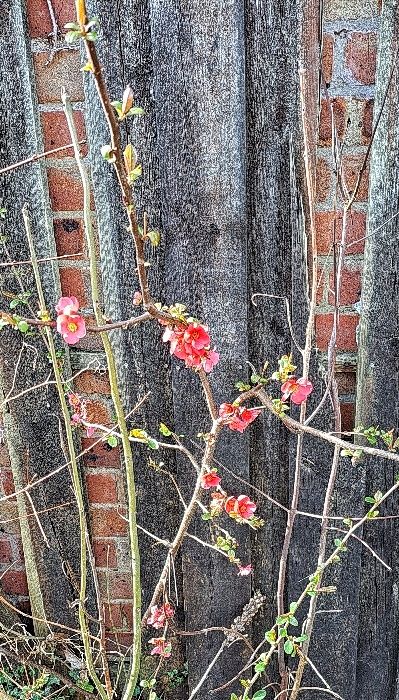
It is a tough shrub easy to propagate and provides a bright show of colour in the springtime when it is most needed. The first time I came across it, it was growing as a free-standing shrub in a tiny front garden in Faversham in Kent.
I did not know what it was called then. It was almost 30 years ago at the beginning of my gardening journey long before the internet would be able to tell me the name of this bright salmon pink showy shrub with just the click of a button. I was entranced by the little sparks of vivid colour flowering on bare twiggy branches so bravely through ice and snow. At that time the library was my preferred venue for learning so off I went and found out the name for this tough pretty shrub and it has been present in all of the gardens I have worked in since. Superba Pink lady is such a vibrant peach pink springtime colour, but this plant also comes in white and scarlet red with glowing gold centres.
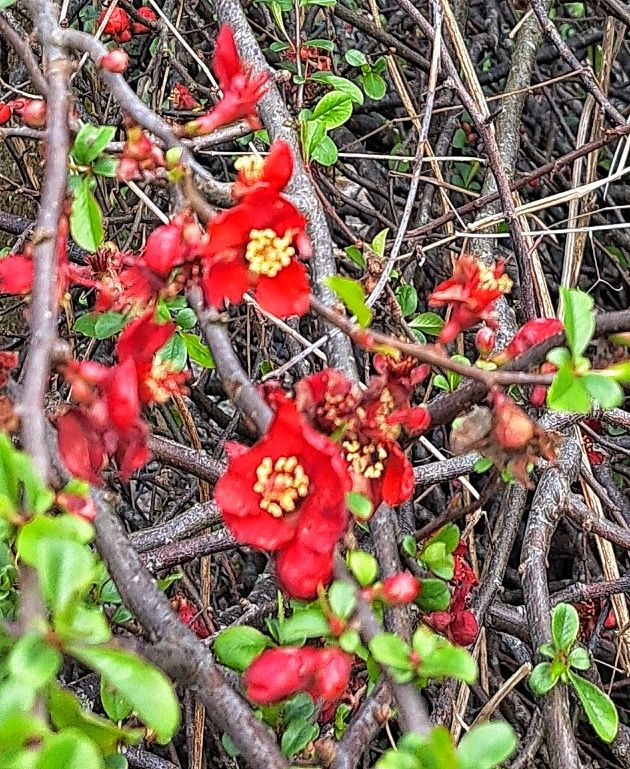
My red and white plants are still very young as I only bought them very recently. Although they can be grown freestanding, I prefer to give them the protection of a wall or fence, where, when mature their long whippy shoots will clothe the walls with beautiful pink, white, or red and gold blossom like flowers from late winter for several weeks.
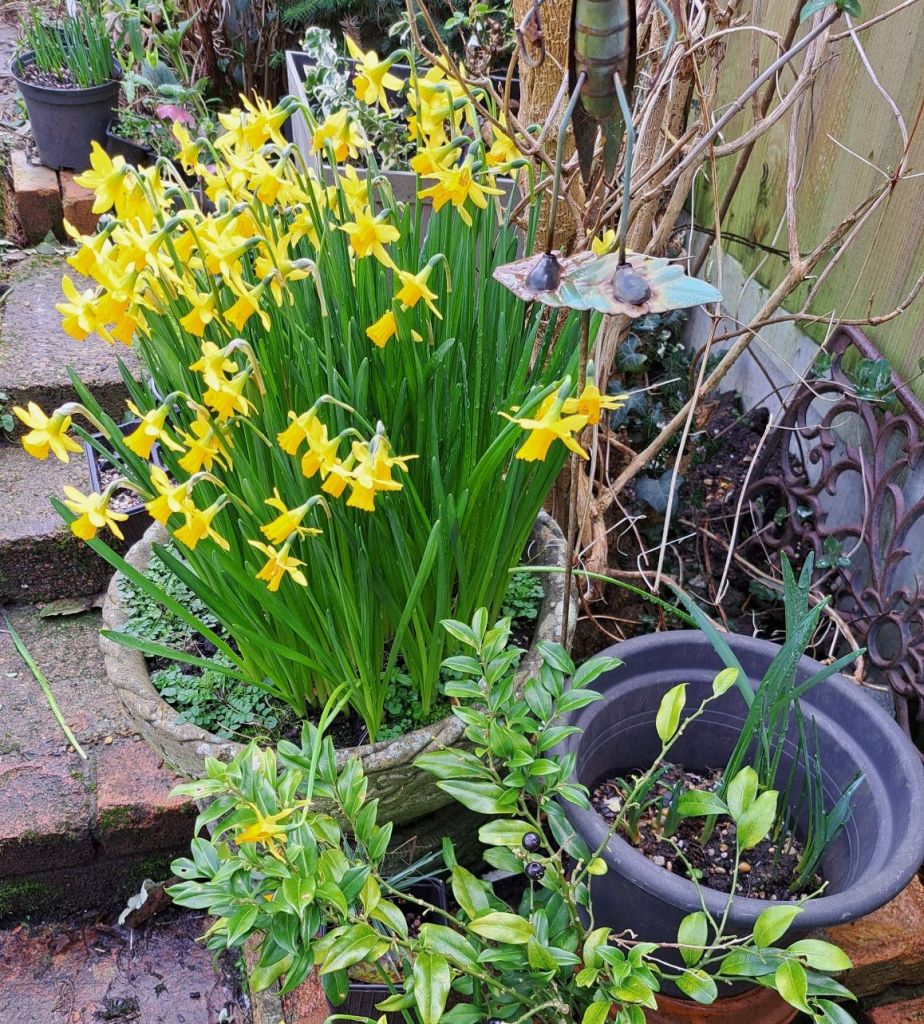
The daffodils started weeks ago as well, the earliest ones beginning at the end of January,

I have made a point over the years of buying daffodils with different flowering times, so that the show continues from January until May. Although the smaller types such as February Gold and Tete a Tete are resilient and tough in the garden and the weather does not seem to affect them too much.
I have to admit to a love of the fancy Daffodils
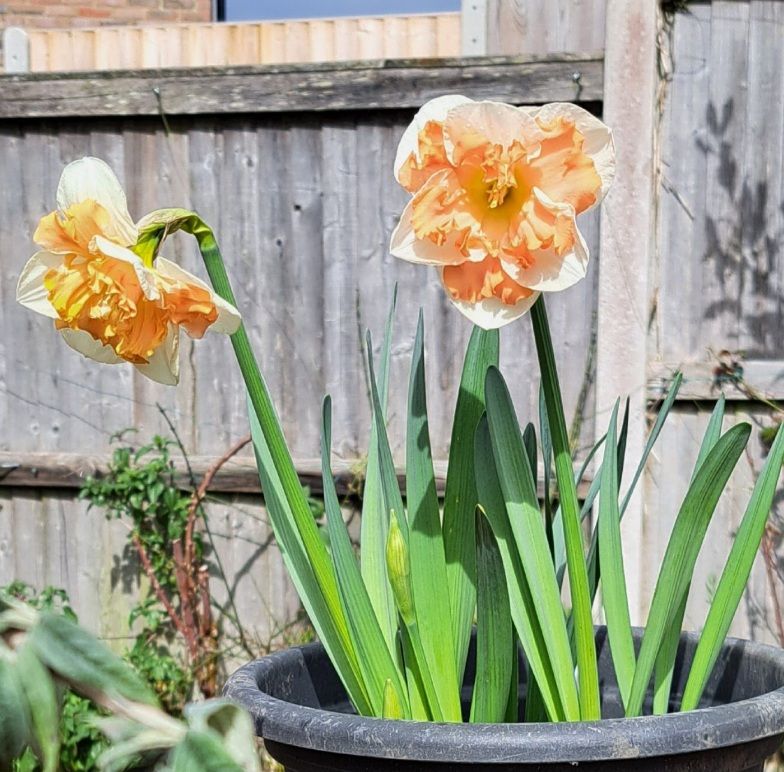
that look so statuesque and strkingly elegant when cut and placed in a vase paired with variegated foliage and Viburnum blossom for the earliest bouquets. Viburnum is another tough shrub braving the earliest days of the year and blooming until at least mid spring. It is evergreen with dark leaves and flowers that open from a faded pink colour to a bright white that glows in the springtime sunshine. I have this shrub growing both freestanding and against a wall in my garden.

Like a lot of other people, I also have Forsythia in my garden. I love Forsythia for the incredibly bright yellow flowers that cover the shrub, It does need to be carefully sited as it is so bright. Here, it is seen against the deep blue of the springtime sky, the shrub needs careful placement in order to achieve this effect.
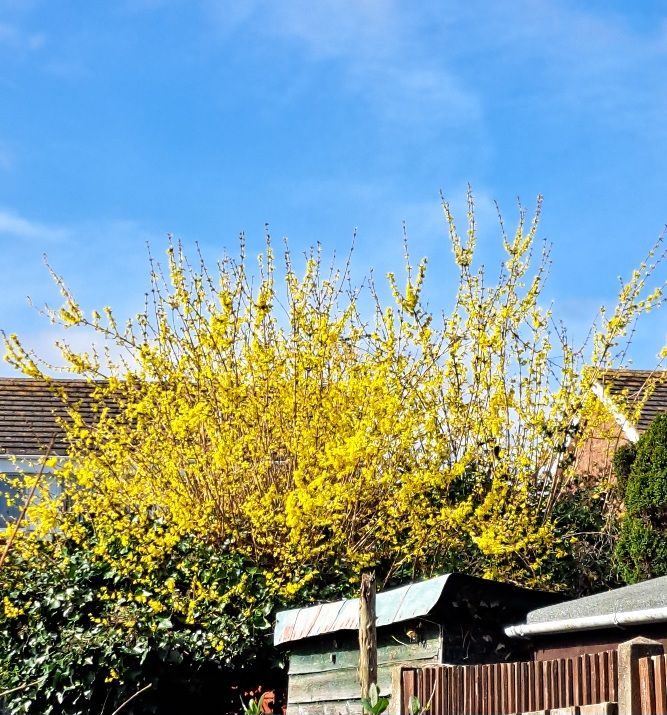
I make a point of cutting my plants back hard, but then, of course, I do not get the effect of seeing it against the sky, which is such a fantastic way to view it. If sited for this effect, when pruning time comes around, if only some of the branches are removed, then the size will be kept, and this will promote rejuvenation and next years flowers.

The plants that I have been writing about are all shrubs and will grow to quite sizeable proportions if left unpruned. I feel they are best used as the backdrop setting for the smaller flashes of colour in the springtime garden. The Crocuses, Polyanthus,
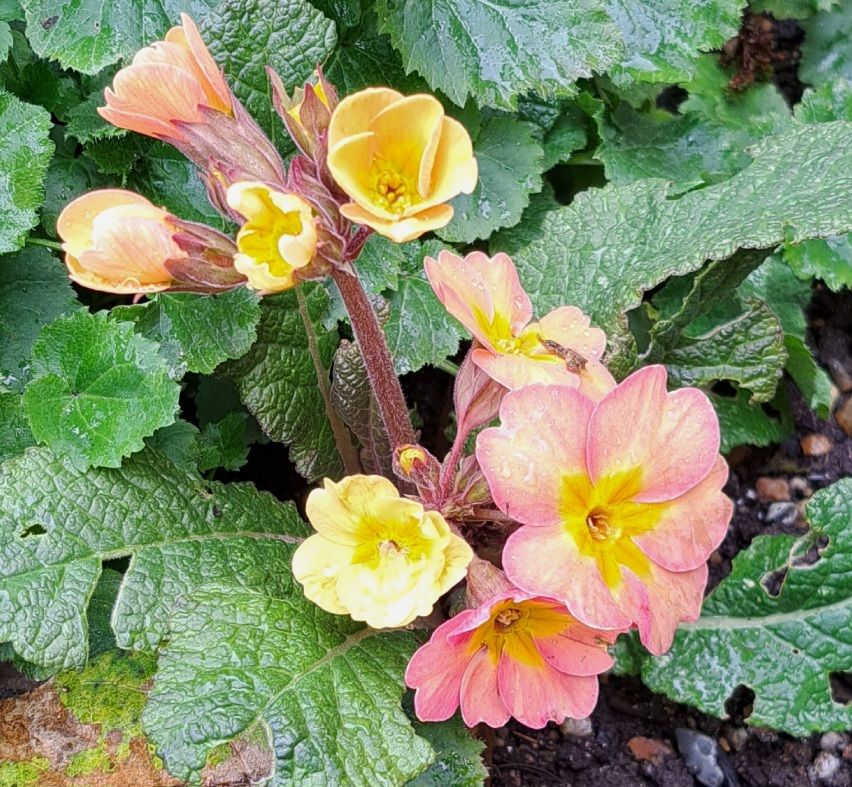
Hyacinths, and of course the primrose. If a springtime border is planned for that uses all these flowers together, the effect can be very, very pretty.

If the border is planted against a fence it would be possible to have the wall shrub growing against the fence, a smaller shrub with decorative foliage in front of the wall shrub or climber, maybe a Spirea which has lime green foliage this time of the year. In front of that, some daffodils, some early ones, then some mid-season ones. In front of the daffodils, I would have some later flowering perennials, then in the very front, I would plant polyanthus and hyacinths, maybe in a zig zag pattern In my garden, I have used the first terrace to achieve a springime effect, I am pleased with it, but there is always room for improvement.

 Seeds and Seams