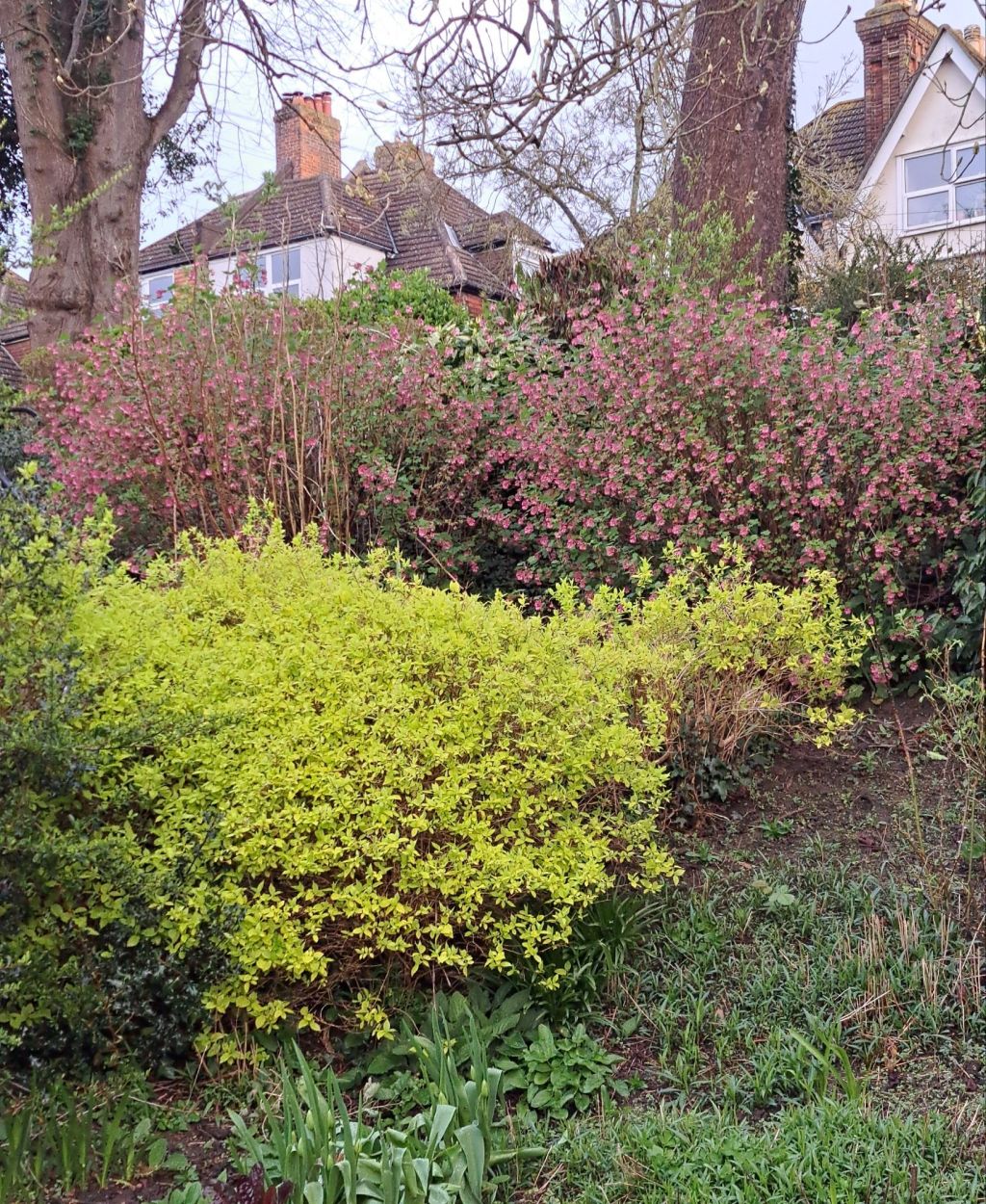


Taking photographs of gardens that I have visited or noticed is a hobby of mine and one that I have been doing for a long time. I like to take photographs of any community gardens or borders that I have seen on my travels that I feel are worth recording for my picture diary. I use these photographs to increase my plant knowledge and to compare plants on a yearly basis.
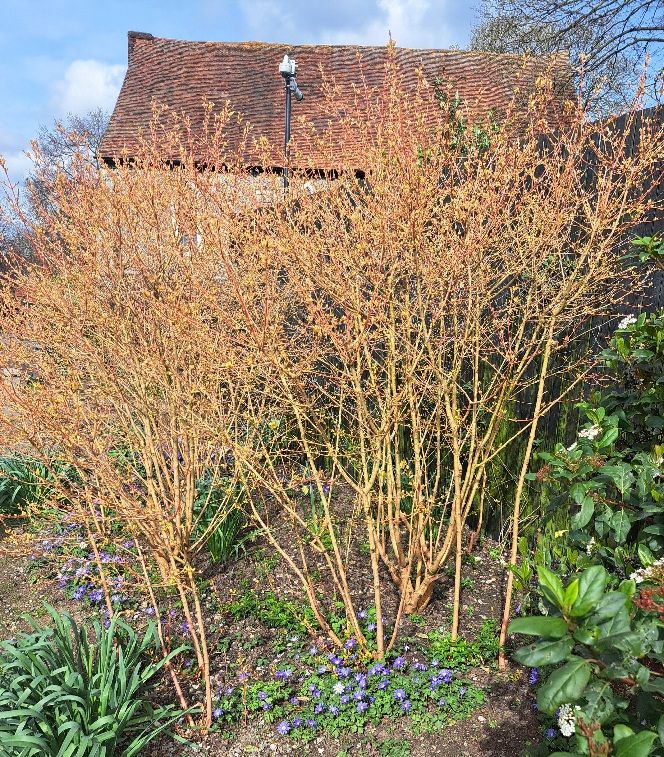
If I see a front garden that I think is particularly nice, and the owner is about, I always make a point of complementing them and asking if I can take photos to publish. So far nobody has refused. This time of the year is particularly good for photographing gardens and borders and I make a point of ensuring that my camera is always at the ready. The border below is striking virtually all year.

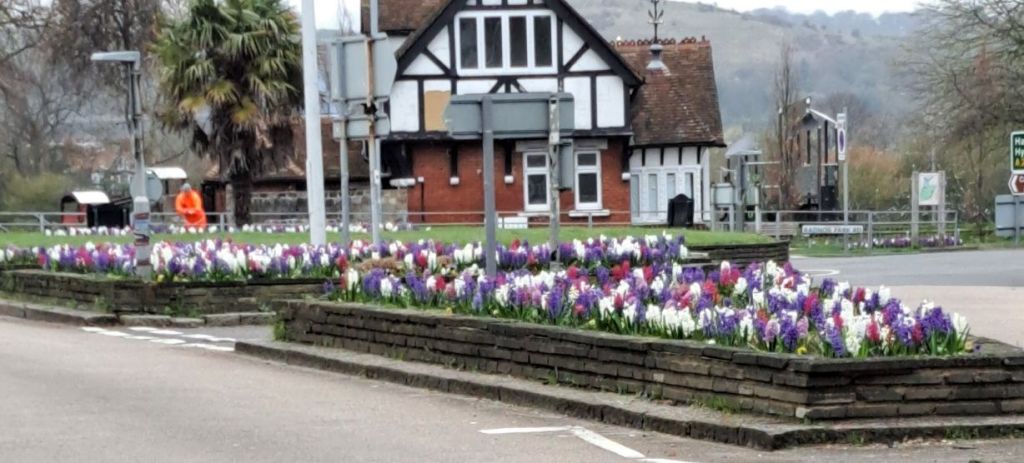
My home town always makes a fine effort with its floral displays. The border below is on my way to my bus stop and has a particularly fine back drop of the church clocktower to the rear of it.

I have cropped the photo as unfortunately the view is impaired by the traffic noticeboard planted in the border. This border and the other 2 in the surrounding area are planted solely with Hyacinths, although it is a pity that the traffic signals are also planted in these beds. Still, that is a modern-day necessity.
In a lot of the books that I read, these border Hyacinths are regarded as being a clunky flower, but I beg to differ, at this time of year I am looking for colour and these Hyacinths provide it. They make me smile every time I walk past them.
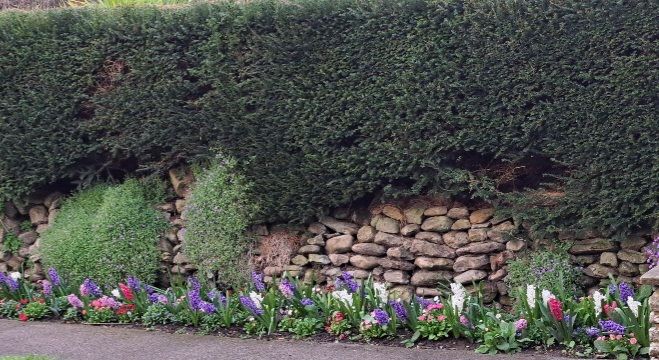
Hyacinths are best purchased and planted in the autumn when all the best varieties are also available. They should be planted about 10 cm deep and 15 cm apart in well drained soil. Keep the bulbs well watered but not waterlogged. Once the flowers are over, reduce the watering as the leaves die off. If the bulbs are planted in borders, feed with a general purpose fertilizer in February to encourage them to flower. If the bulbs are planted in containers, feed with a high potassium feed such as tomato or rose food from early spring until approx a month after flowering to encourage next years flowers. It may be necessary to stake the blooms with a pea stick as they get very large. Be careful not to pierce the bulb when this is done. When the flowers fade, cut the flower stalks off at the base. Bulbs grown in containers can be lifted after flowering, and when the leaves have died down, store them somewhere cool and dry in order that they can be replanted come the autumn. I group mine in colours, ensuring that I label them to prevent confusion in the rush of the autumn.
The bedding Hyacinths that are available in the autumn are hybridzed from the species. I have not grown the species myself, but I intend to buy some of the bulbs this year and try them out. My research advises that they are more delicate than the bedding Hyacinths, we shall see.
Another stalwart of the springtime garden is the Polyanthus.

Polyanthus are hybridized from our native creamy yellow primrose. Our native primrose flowers close to the soil whilst Polyanthus carry their flowers in a bunch at the end of thick stems, usually about 6 inches ( 15cm). As both Primrose and Polyanthus are a woodland flower they grow very well in rich fertile, moist soil in dappled sunlight which does not get too hot, or although Polyanthus may be a touch more tolerant of brighter conditions especially as their flowers are held higher. Our local councils use them very effectively to bring a pop of cheerful colour to municipal flower beds at the end of Winter.
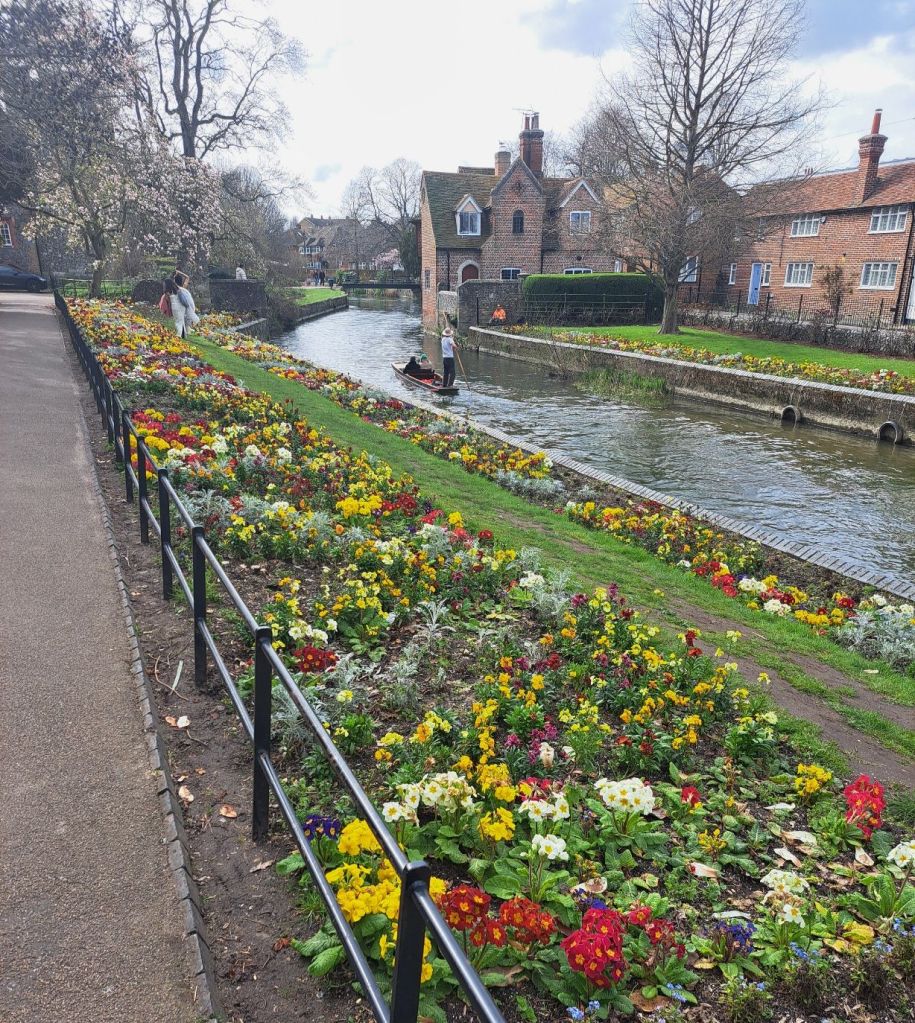
My local gardens have been full of people looking at the beautiful display in the community gardens. I have tried to grow Polyanthus from seed but have not yet been successful. I think that I will probably try again this year.

Tulips are another flowering bulb used by councils to provide colour in municipal gardens.

Again, they are very bright and cheeful. I grow a lot of tulips in my garden, for exactly the same reason. It is difficult to keep tulips from year to year, but my research advises that if a tulip has any green in its flower, it may be more successfully hybridized. These are typically the viridiflora type tulips. The Darwin type tulips may also be more reliably perrenial as well. If you intend to keep your tulips for reflowering the next year, the growing conditions really matter. My research shows, and I have found myself that if the bulbs are planted deeply and placed in a hot position, then they are more likely to come back next year. But even then, it is probably a good idea to plant some fresh bulbs every year, just in case. Last year, I grew mine in pots and then planted Cosmos over the top of them. They are flowering, but apparently, if I had just left them in their pots in the sun to bake over the summer, that would have been even better.

I think that I will try experimenting this year and see what happens next year. Of course, I will really need to make sure that my date and variety labelling is clear in order to do this, but I think that it will be worth it, especially in my front garden. The soil there is much sandier, and in the summer, the front garden gets very warm due to the afternoon sun that it gets. It is shaded by mature trees now, which the council seem to refuse to manage and prune correctly, but even so, the sunlight filters through on a warm sunny day.
I feel that in the small home garden, all these pretty little spring flowers make the most impact and look their happiest when planted in small drifts of 3, 5 or 7. Then they make a real impact in the border. Although, they are all very small plants, to my mind they pack a real punch and walking past even a small clump of Hyacinths, Polyanthus, Primrose or Tulips always makes me smile.

 Seeds and Seams
Leave a comment