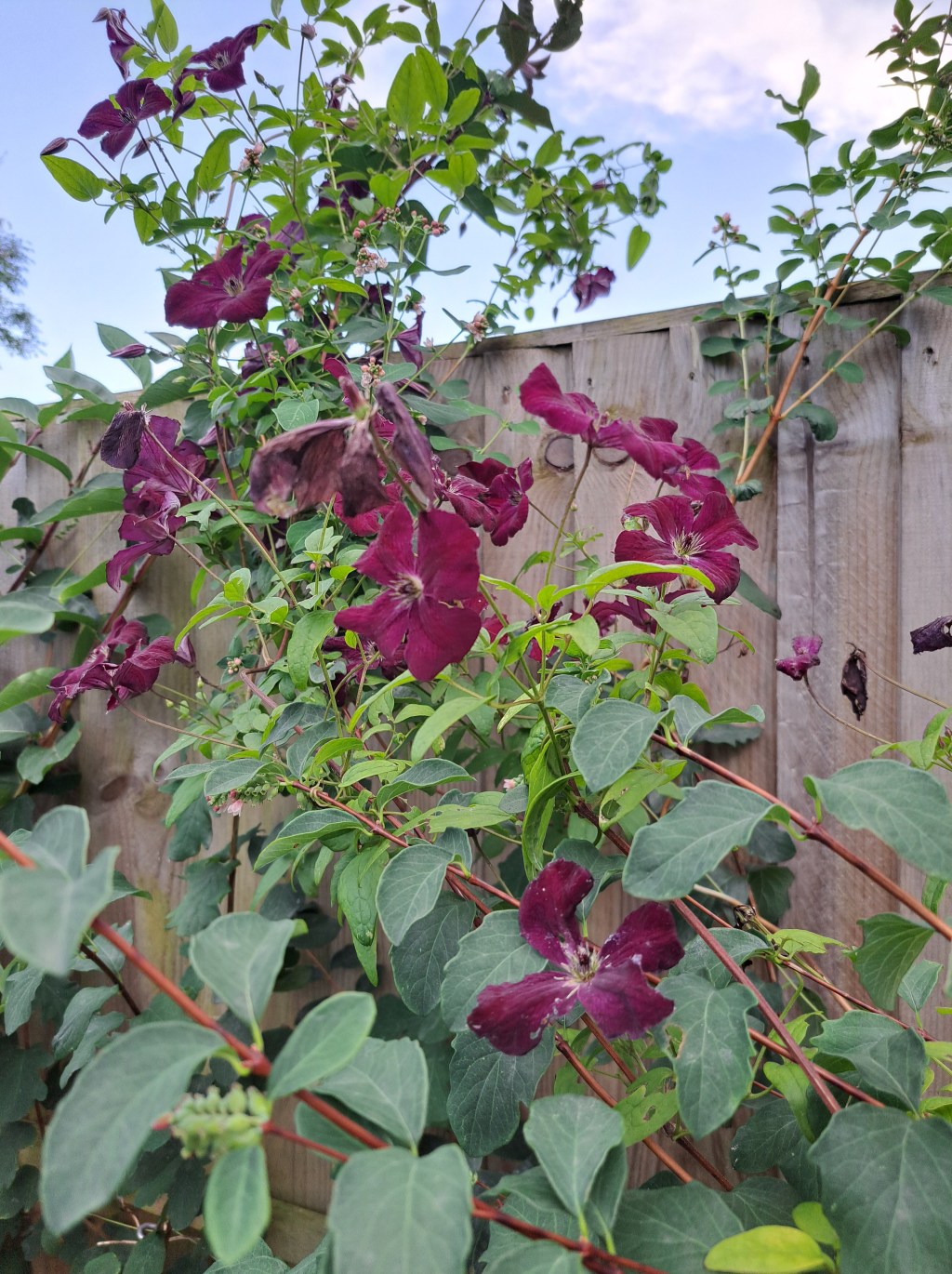


I began to write this post at the beginning of July, during the incessant rain we were then experiencing. Thankfully, since then, we have had some beautiful summer days. Many years ago, I replaced my lawn with pebbles and stepping stones. I chose the largest pebbles that I could find as there are a lot of cats in my neighbourhood, and I did not want the garden to become a cat toilet. This has seemed to work, especially as the gravel is also interspersed with foot wide reconstitued stone paving slabs, these have weathered with age and are especially attractive. I have also used a number of carpeting plants to add some green to the lowest level of growing space in the garden. I have quite a lot of Chamomile and Thyme. The Thyme does especially well in my garden as it is primarily south facing. The Thyme looks lovely from spring when it flowers with pink or red flowers and then the tiny green leaves throughout the summer, and of course, the smell is so evocative of the mediterranean.
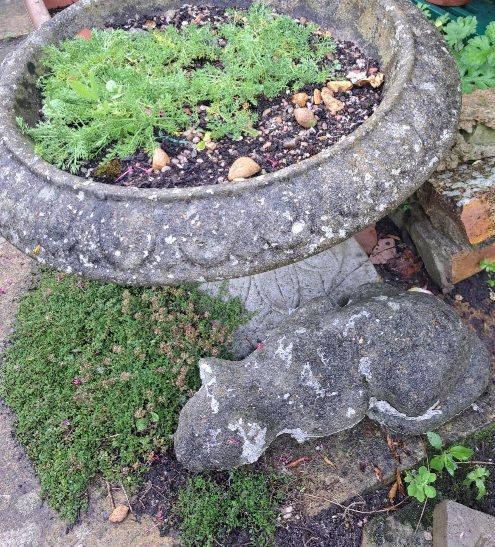
The pebbles/paving slab/carpeting plants have helped with the weeding as well. I have found that bindweed is a significant problem in my garden. I have been researching the use of Tagetes Minuta, which apparently will help control bindweed through secretions through its roots. I am not entirely sure how this works on my cultivated flowers but I think it might give it a go just as an experiment, although I will need to do some more research I think to make it an effective method of weed control. In the meantime, pulling out bindweed is strangely satisfying. The recent wet weather has been especially kind to bindweed, and I recently spent a very productive morning pulling it away from my Escallonia, Pyracantha hedge.
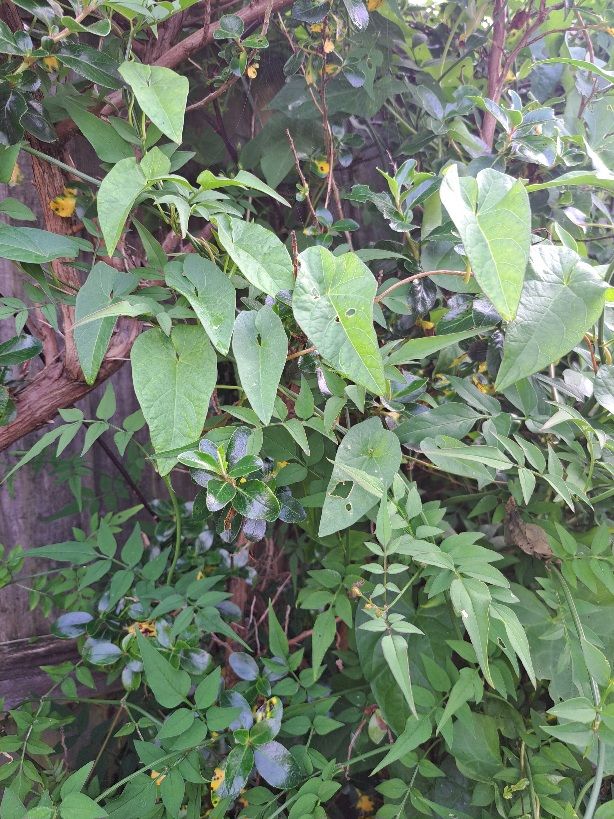
It is important to pull as much of the root up as is humanly possible due to the ease with which it roots from the tiniest piece left in the soil. It is a shame really as the large sparkling white flowers glisten in the morning light.

But it is a pernicicous weed and will strangle anything in its path in its quest for world domination. The latin for bindweed is Convolvulus Arvensis, and it belongs to the same family as the Morning Glory (Ipomea tricolour). Ipomea is a beautiful plant and not invasive. The variety called Heavenly Blue is one that I have attempted to grow over many years. This flower is a beautiful sky blue colour, here it is growing in a medium-sized pot
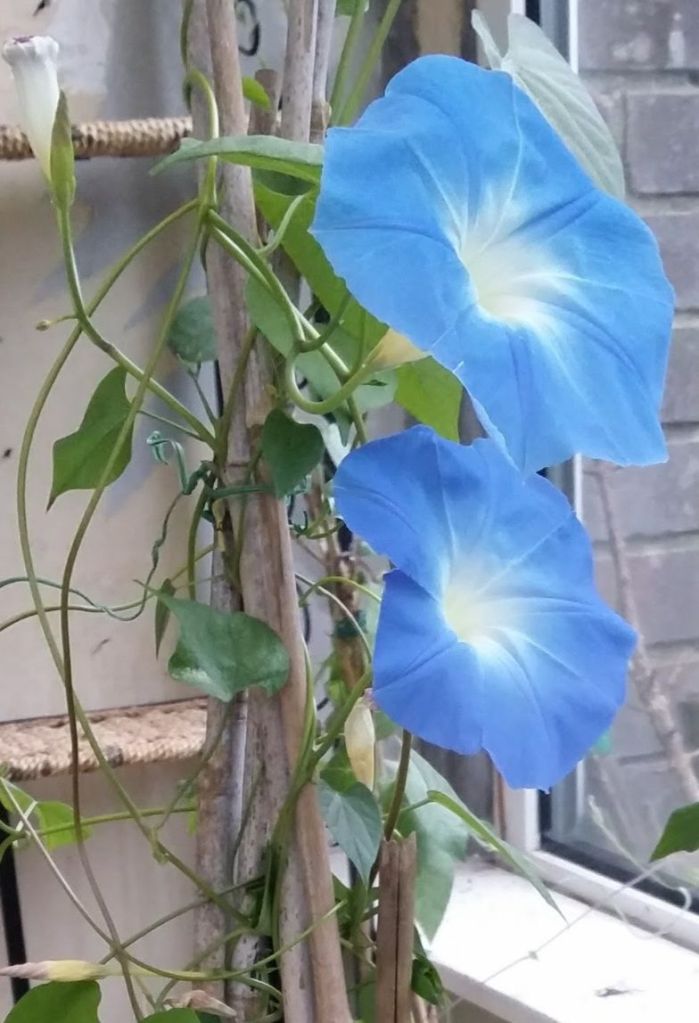
I do not think is the best way to grow it, so this year it will be going into a much larger pot and I will be growing it up the sunny side of my garden through the climbing roses. The foliage is luxuriant, the leaves being large and heart shaped, but the flowers can be a little on the sparse side and tend to be predominantly open in the morning. But the flowers are so large and spectacular. I think I can forgive all the shortcomings, I just hope that I can save my plants from the ever-present slugs.

Another job that I am currently doing is removing the dead petals from the spectacular dark magenta floribunda rose on the lowest terrace of my garden. I have had this rose for so many years that I am not sure which variety it is. The flowers do not fare well in the rain they become a soggy mess, drying to an unattractive papery brown shell,
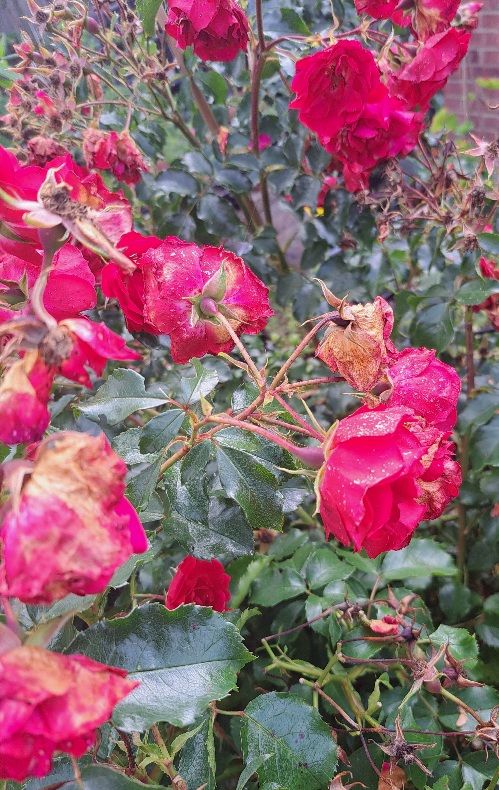
I have always deadheaded it as soon as this begins to happen. But last year, for some reason, I left some of the dead flowers over the winter, and I realised then that the hips, whilst small, were numerous, and a bright orange colour.
I find it very difficult to leave the flowers on the bush in their messy papery brown state so this year instead of deadheading, I am tidying the flowers as they fade to their brown papery shells by removing the petals but leaving the slightly bulbous emerging hips behind
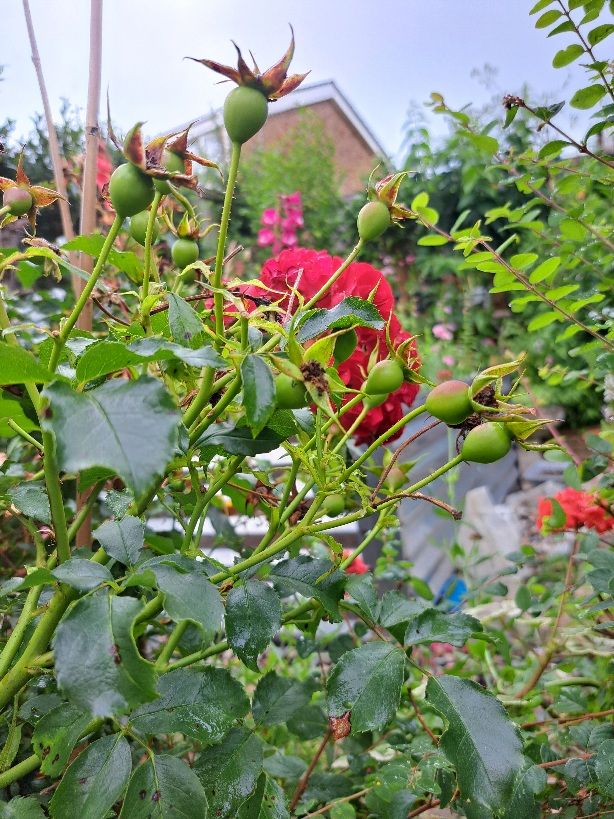
This is an experiment to see how the bush looks when it is covered in the orange hips. I do find it difficult to leave them because they are not very attractive whilst the hips are growing, but at least by removing the petals, it looks intentional and not as thought it is uncared for.
I love visiting gardens and my favourite type is the small suburban gardens that I can relate to. I have not been able to visit so many this year as in previous years, but I did get to Deal open gardens on the very last day of June. I find it very difficult to function in extreme heat, and the weather on this day was perfect for me, being still and cloudy with rain in the air. I packed a cagoul and a small lunch and set off. Deal on the South Coast is a historic town famous for its smuggling heritage, but there are a number of beautiful small gardens that I have been visiting for several years. The first garden is accessed through a beautiful sheltered passageway.

The gardeners have made the most of this alley and it is stunning and serves as a visual flowery feast of what can be done in a very small space.
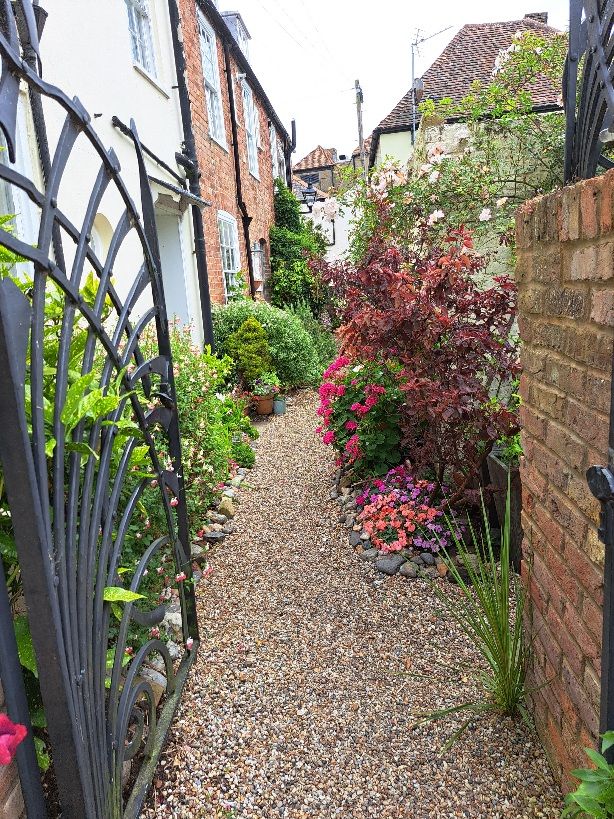
The garden itself has evolved over the years. It is a very sheltered spot with a high brick wall covered in climbers and creepers. the entrance is festooned with roses and the whole area is calm and soothing.
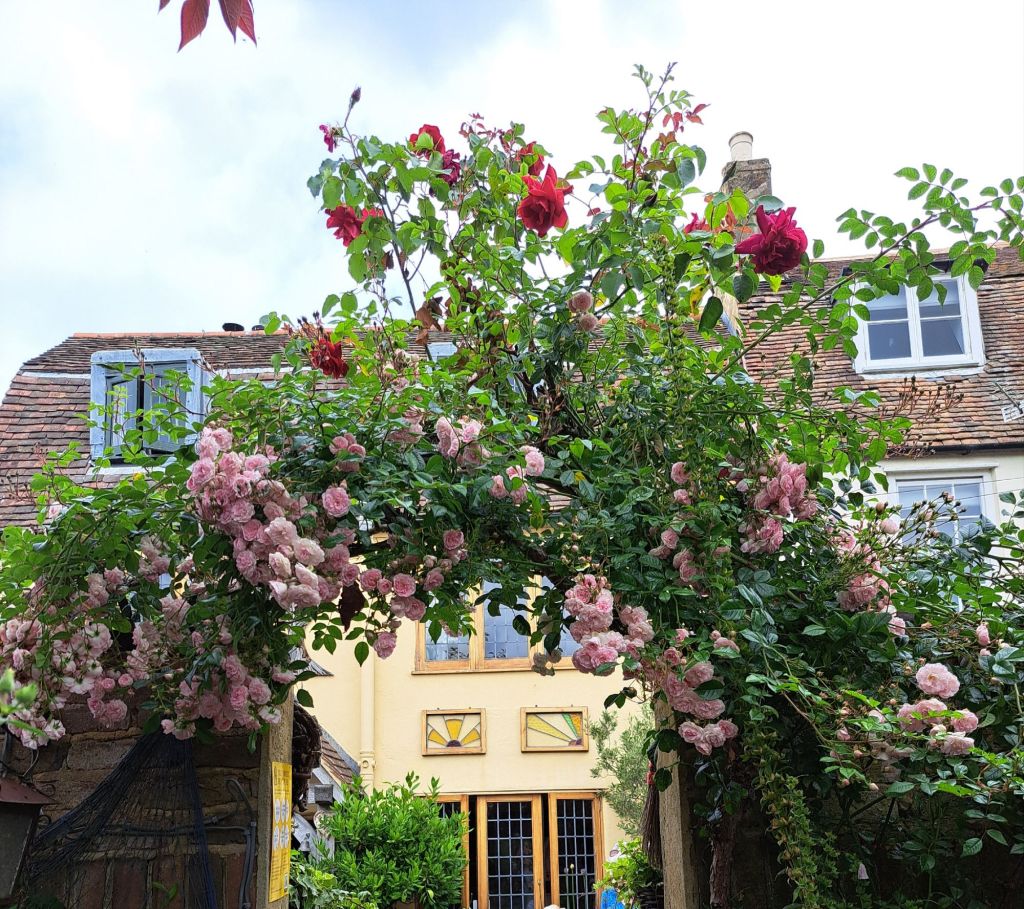
It is a garden after my own heart as there is no grass. Instead, the ground is covered with gravel, bricks, and small paving slabs.

There are several spots to sit and enjoy a peaceful 5 minutes, and the whole garden I find restful and contemplative.
The second garden whilst completely different has some similar features also being devoid of any grass and having a feeling of seclusion. But this garden has a different feel, there are still places to sit, but the layout of the garden is that of a journey as you walk in an oval on a brick path around the central island border taking in the floral tapestry of the boundary borders as you do so.

This garden has been featured in Gardeners World magazine recently and it is easy to see why. There is so much to see. The flowers predominate and it is beautiful.
All in all, July is a fabulous month in the garden

 Seeds and Seams
Leave a comment